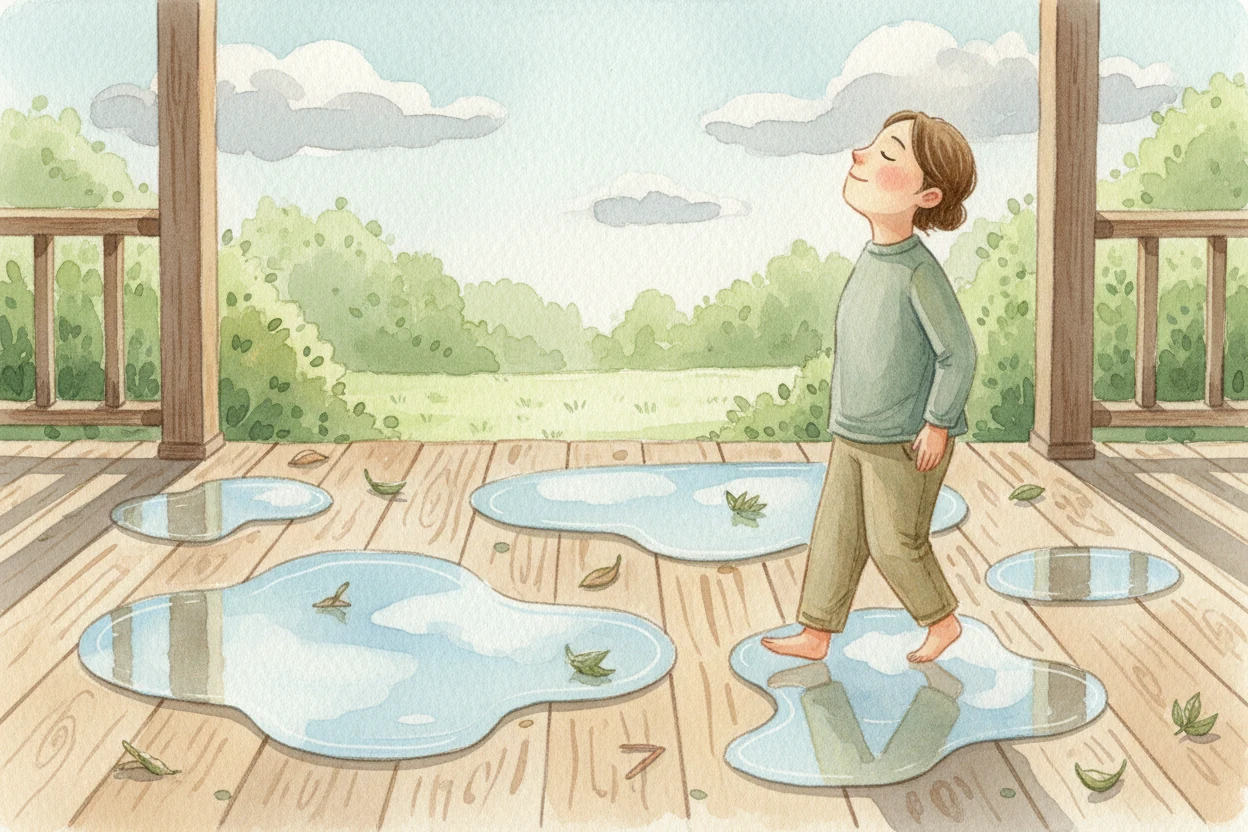
Rain's Secret Recipe
You step outside after a storm and inhale โ that clean, electric smell fills your nose. It's so distinct you could bottle it. What is that? Why does rain change the air?
First, rain washes dust and pollution out of the air. All that invisible gunk floating around โ pollen, car exhaust, tiny particles โ gets knocked down by falling water. The air's literally cleaner, so you smell less of the usual city-and-nature mix. But that fresh smell? That's not just absence. That's chemistry.
Meet geosmin. It's an earthy chemical made by soil bacteria โ specifically, bacteria called actinomycetes. These little guys live in dirt everywhere, and when rain hits dry ground, it releases geosmin into the air like a puff of powder from a dusty book.
Your nose is absurdly good at detecting geosmin. We're talking five parts per trillion โ that's one drop in an Olympic swimming pool, then dilute that pool a hundred more times. Evolution probably tuned us to notice it because "wet soil" meant "water source nearby." Useful when you're wandering a savanna.
Rain also stirs up oils from plants. During dry spells, plants release oils that coat rocks, soil, even pavement. When the first raindrops hit, they mix with these oils and turn into tiny aerosol particles that float up into your nose. It's like nature's perfume atomizer.
Then there's petrichor โ the official name for that whole smell. It comes from Greek: