Toast's Bumper Cars
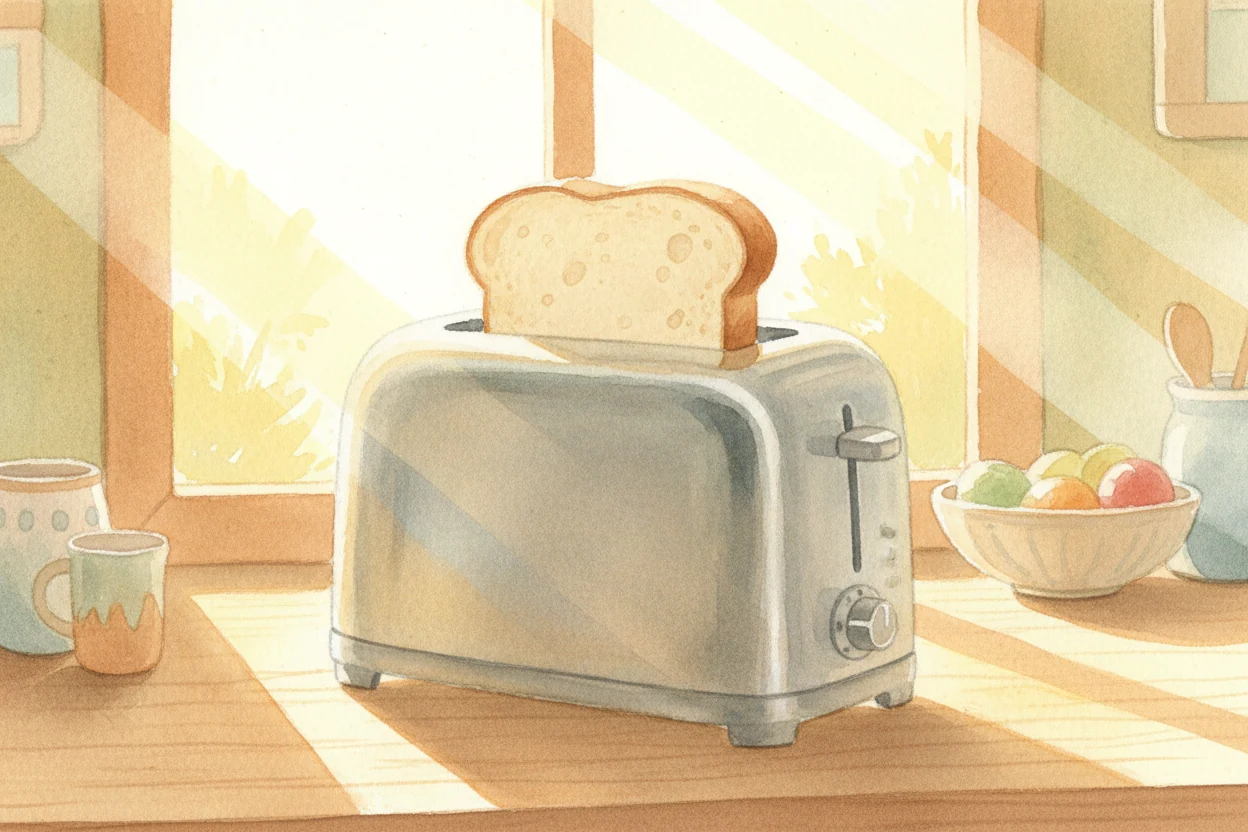
You slide a piece of bread into the toaster, push the lever down, and wait. A minute later, out pops toast โ golden brown, crispy, and smelling amazing. But the bread didn't have any brown paint hiding inside it. So where did that color come from?
The answer lives in the bread itself. Bread is packed with two invisible ingredients: sugars (tiny sweet molecules) and proteins (long chains of building blocks called amino acids). When the bread is cool, these ingredients just sit there, minding their own business, like kids on opposite sides of a playground.
But when you turn on the toaster, everything changes. Heat is energy, and energy makes molecules move. The hotter it gets, the faster they jiggle and bounce. At around 300ยฐF, the sugars and proteins start crashing into each other like bumper cars at a carnival.
When a sugar smashes into a protein at high speed, they stick together and transform into something entirely new: hundreds of different brown molecules. This chemical reaction is called the Maillard reaction, named after the French scientist Louis-Camille Maillard who figured it out in 1912. It's not burning โ it's building.
These new brown molecules are what give toast its color, but they also create the flavors and smells you love. The Maillard reaction doesn't make just one kind of brown molecule โ it makes hundreds of them, each with its own taste and aroma. Some taste nutty. Some taste sweet. Some smell like caramel or roasted coffee.
The Maillard reaction is happening all around you, not just in your toaster. It browns the crust on bread when it bakes. It sears the outside of a steak. It turns coffee beans dark during roasting. It crisps the skin on roasted chicken and caramelizes the edges of cookies. Anywhere you have proteins, sugars, and heat above 300ยฐF, you get that beautiful brown transformation.
Here's the tricky part: if you toast too long, you cross a line. The Maillard reaction browns your bread, but if the temperature keeps climbing past about 400ยฐF, the sugars start to burn and turn into pure carbon โ that's the black char on burned toast. Carbon has no flavor. It just tastes bitter and ashy. You've gone too far.
So the next time you watch bread turn brown in the toaster, remember: you're not just heating it up. You're a kitchen chemist, conducting a microscopic collision experiment at 300ยฐF. The sugars and proteins are crashing together, building new molecules, painting your breakfast brown one tiny reaction at a time. And that, right there, is why toast tastes like magic.