Ocean's Salt Story
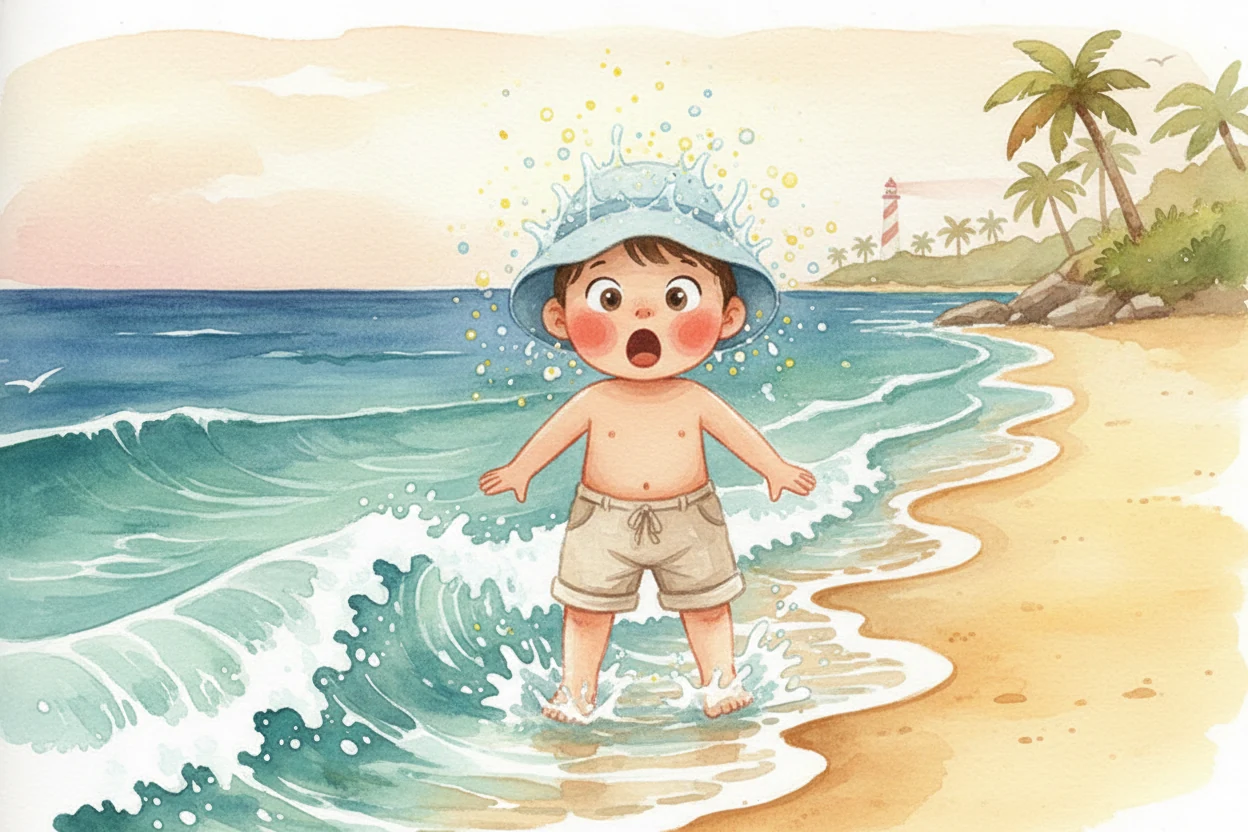
You've tasted it โ that sharp, stinging flavor when a wave smacks you in the face. The ocean is salty. Really salty. If you filled a bathtub with seawater, you'd have enough salt in there to cover your entire kitchen floor ankle-deep in white crystals. But oceans weren't always this way.
Billions of years ago, when Earth was young and rain first began to fall, the oceans were fresh. But rain does something sneaky. It's slightly acidic โ not enough to hurt you, but enough to act like a very slow, very patient acid that nibbles away at rocks.
As rainwater runs over mountains and through valleys, it dissolves tiny bits of minerals from the rocks โ especially sodium and chloride. You can't see it happening. A single raindrop might carry away a few dozen atoms. But trillions of raindrops, over millions of years, add up.
All those streams and rivers eventually dump into the ocean, carrying their invisible cargo of dissolved minerals. The ocean collects it all. Sodium from here, chloride from there, magnesium from somewhere else. The ocean is Earth's mineral piggy bank, and every river makes a deposit.
Now here's the trick: water can leave the ocean, but salt can't. When the sun heats the ocean's surface, water evaporates into the air and becomes clouds. Salt is too heavy to evaporate โ it stays behind. So every time the water cycle runs, the ocean loses fresh water and keeps all the salt.
It's like leaving a pot of soup on the stove with the lid off. As water boils away, the soup gets saltier and saltier. Earth has been running this "lid off" experiment for over three billion years. Rivers keep adding minerals. Evaporation keeps removing plain water. The salt justโฆ accumulates.
There are other salt sources too. Undersea volcanoes belch out dissolved minerals. Hydrothermal vents โ like hot springs on the ocean floor โ pump out chemicals. Even sea creatures contribute: when shells and skeletons dissolve, they release calcium and other minerals back into the water.
The ocean's saltiness has reached an equilibrium now โ a balance. New salt still arrives, but some gets buried in seafloor sediments or trapped in lagoons that dry out into salt flats. The ocean isn't getting much saltier anymore. It's been this salty for hundreds of millions of years, and it'll stay this way for millions more.
So the next time a wave surprises you with that sharp taste, remember: you're tasting three billion years of rain and rivers, of evaporation and geology, of the slow patient work of water dissolving stone. The ocean's salt is a library of everywhere water has ever been.