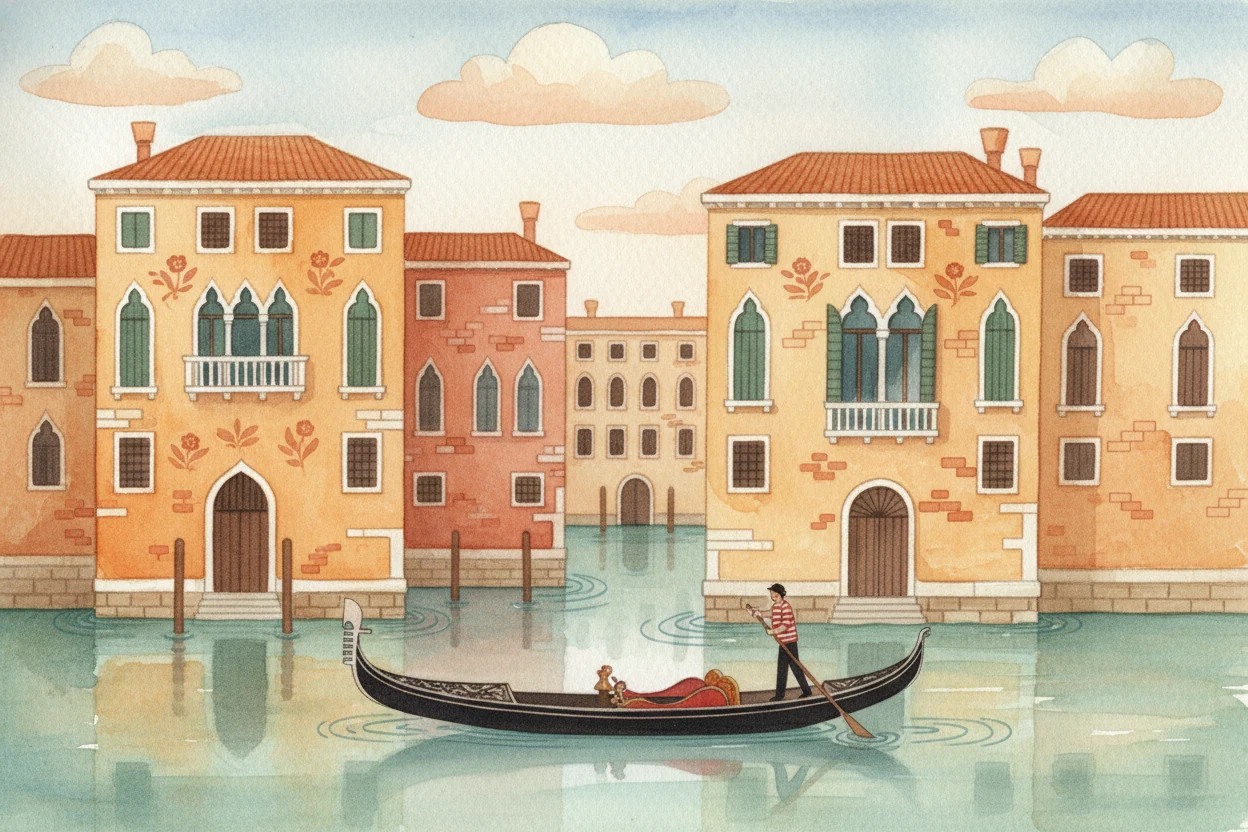
Venice's Hiding Trick
Venice sits on water โ not floating, not hovering, but actually built there, houses and churches and bridges rising right out of the lagoon. Why would anyone pick such a weird, difficult spot to build a city?
Rewind to the year 400. Northern Italy is getting invaded โ again. Armies sweep down from the north, burning cities, taking what they want. If you lived on the mainland, you had a problem: nowhere to hide.
But out in the lagoon โ that shallow, marshy maze of islands and mud flats โ invaders couldn't follow. No roads. No solid ground for cavalry. Just water too shallow for big boats and too deep to wade through. It was the best hiding spot around.
So people fled to the islands. At first, just temporary shelters โ fishing huts, places to wait out the danger. But the invasions kept coming. Decades passed. The "temporary" hideout became permanent. They decided: we'll just live here.
Living on islands meant building differently. You can't just dig a foundation into underwater mud โ your house will sink. The Venetians' solution: drive thousands of wooden poles deep into the mud until they hit harder clay underneath, then build on top of those.
The wood they used โ oak and larch from nearby forests โ doesn't rot underwater because there's no oxygen down there for the bacteria that cause decay. Those wooden poles, driven in over a thousand years ago, are still holding up palaces today.
On top of the poles, they laid platforms of wood planks, then stone foundations, then brick and marble buildings. No wheels allowed โ the streets are water. Your grocery delivery arrives by boat. Your "bus" is a gondola.
What started as a desperate hiding place became one of the richest, most powerful cities in Europe โ a trading empire built on wood and water and the simple fact that sometimes the "worst" place to build is exactly the place no one else can reach you.