A Wonderleaf question
How do lenses in glasses and telescopes bend light to help us see?
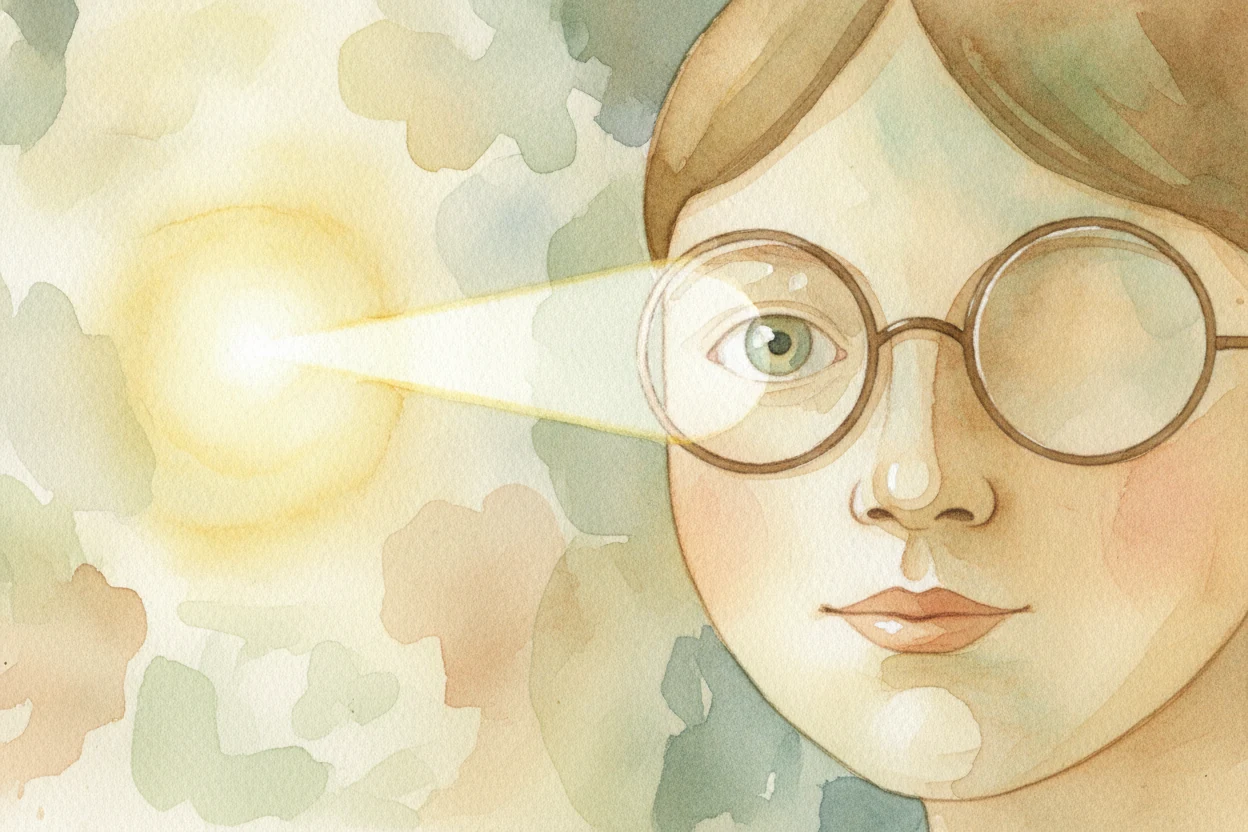
a real page from the book
Glasses and telescopes help by using curved transparent lenses to redirect light. A ray changes speed as it enters glass, so it turns a little; the lens shape steers many rays toward the right spot. In glasses, that spot is your retina; in telescopes, it is a tiny image your eye can examine.
The lovely trick is scale: a telescope’s front lens can be much wider than a child’s pupil, so it gathers more starlight before shaping it. Then a smaller eyepiece lets the picture spread across your view, making a far-off moon crater or planet edge easier to notice.
Wonder words
- lens
- retina
- focus
- refraction
Try it out
Shine a flashlight through a clear glass of water onto paper and watch how the bright patch shifts.
Read the whole picture book
Watercolour scenes, straight answers, about three minutes cover to cover.
Open the picture bookOne more wonder: Why is space so dark?
And the next question?
Ask anything — Wonderleaf writes and illustrates a picture book for it. That's the whole idea.
Ask your own questionThe next wonder, by email
A new question goes up every Sunday evening. We email it to you Monday morning, free to read that week.
One wonder a week, nothing else, ever. Unsubscribe in one click.