Wonderleaf A Wonderleaf question
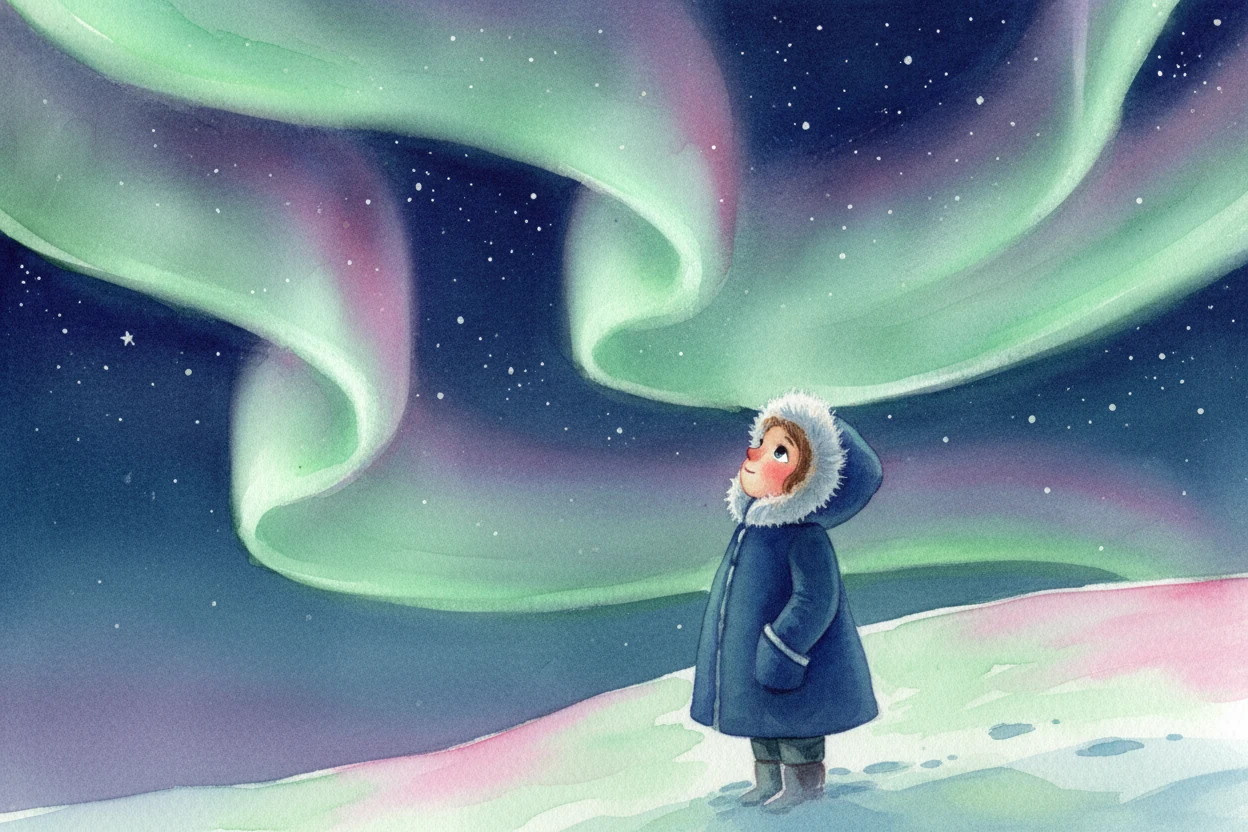
Watercolour of a child in a blue parka on snow, looking up at green and pink aurora

A five-minute wonder

What causes the northern lights?

Somewhere tonight the sky is on fire, and nobody lit it. The answer starts ninety-three million miles away.

On some winter nights, near the top of the world, the sky begins to ripple. Green curtains sway from star to star. Pink ribbons flicker along their hems.

Nobody is up there holding a lantern. So where does the light come from? The story starts far, far away — with our Sun.

Step one · The Sun

The Sun is not a quiet lamp.

It seethes, and it spits. Every second of every day it throws tiny pieces of itself out into space — far too small to see, far too many to count. Scientists call it the solar wind, though it is nothing like wind here: a spray of sparks, blowing in every direction at once.
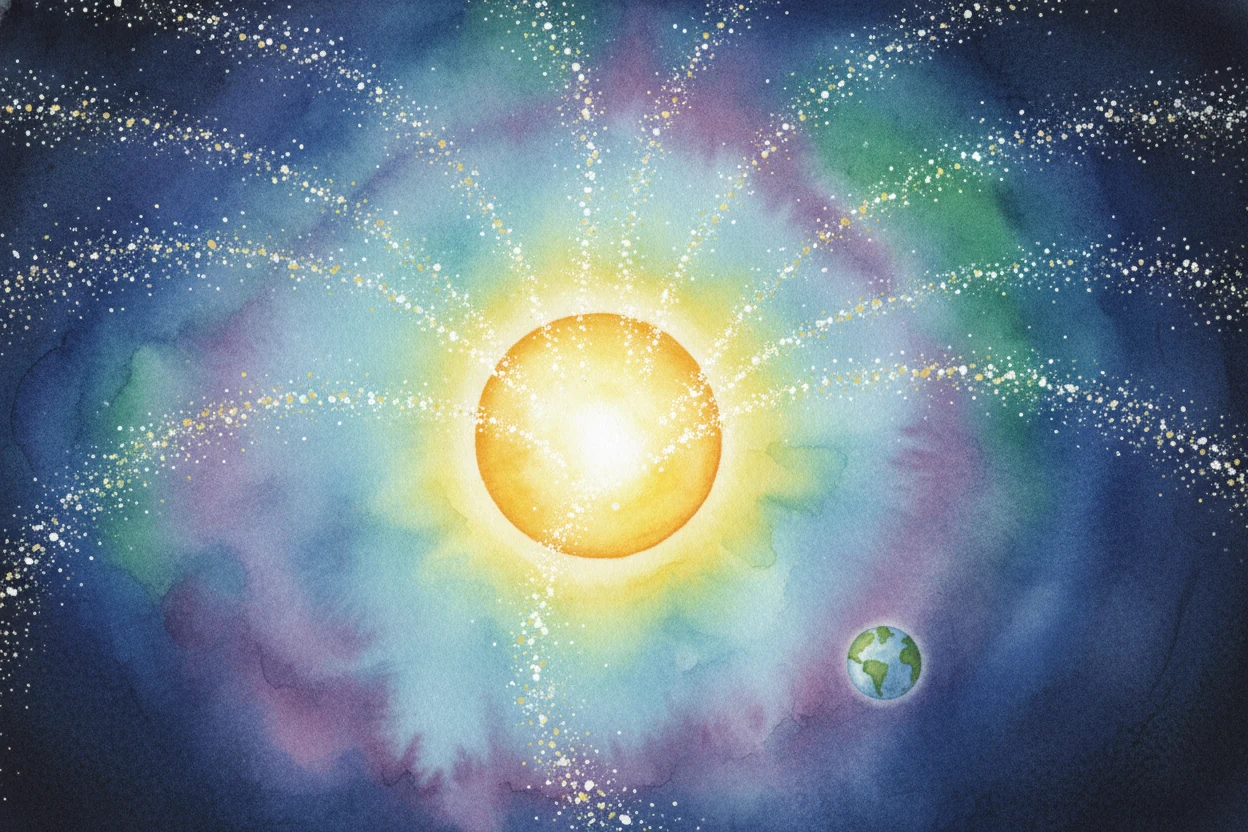
Watercolour of the Sun blazing in deep space, flinging gold sparks outward in every direction, with a tiny Earth far off to one side
Some of that spray is pointed at us.

Step two · The crossing

They fly. And fly.

Look how small we are in that picture. The sparks have ninety-three million miles of cold dark to cross, and it takes them about two days. While they travel, you eat breakfast. You go to school. You fall asleep.

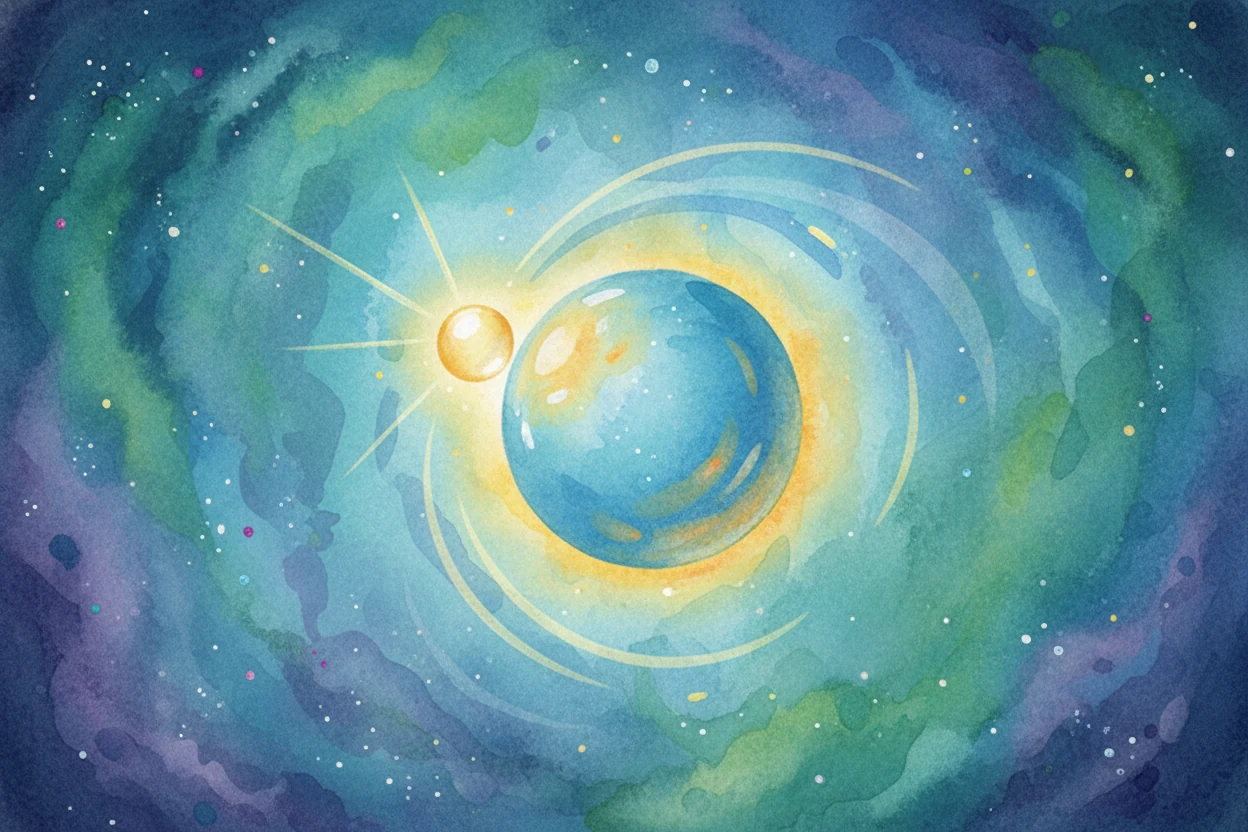
Watercolour of a bright spark sweeping toward a blue world, rings of gold light spreading around it
Two whole spins of the Earth — and they are still coming.

Step three · Arrival

Then they meet something waiting.

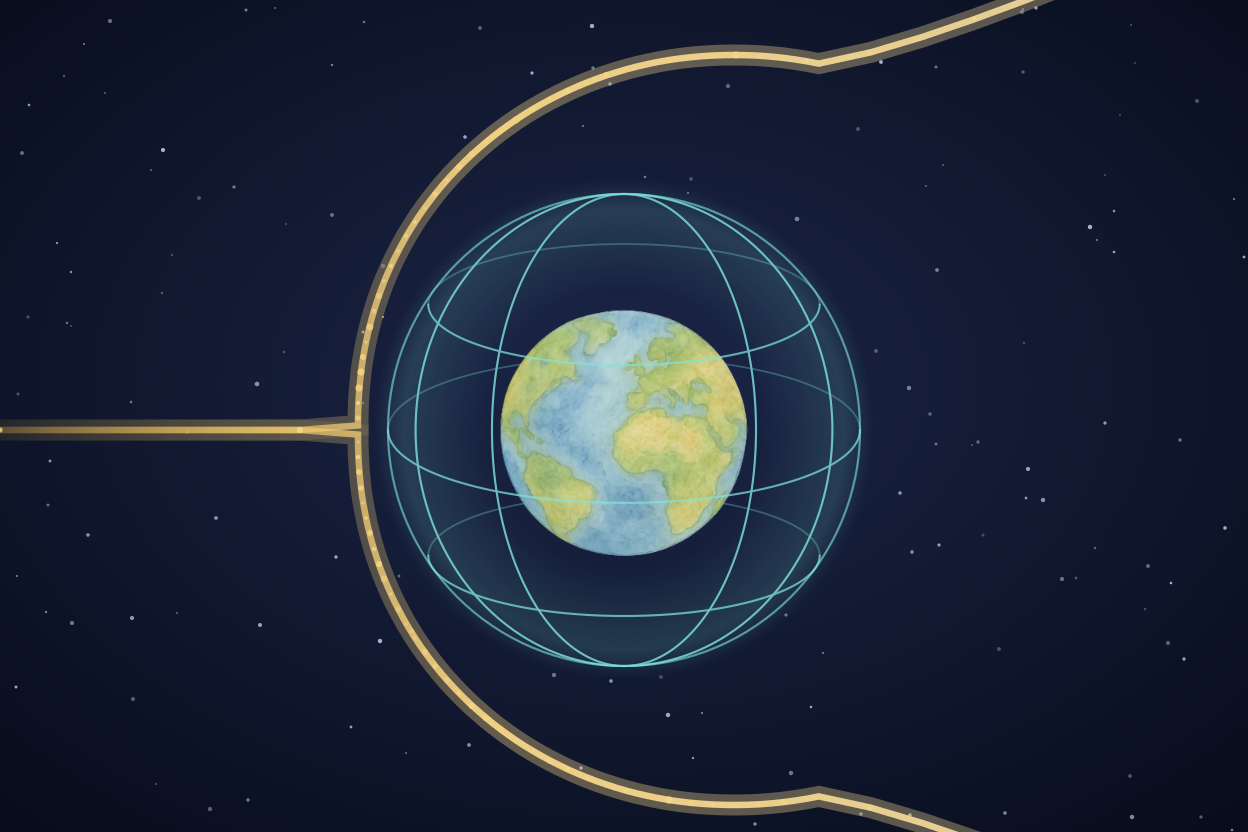
The travellers arrive above a dark, sleeping world. And here they run into something nobody can see — something our planet has been wearing the whole time.

Earth wrapped in a glowing cage of magnetic field lines. A stream of golden particles arrives from the left, bends where it meets the field, and sweeps away around the outside without ever reaching the planet
The invisible thing, finally drawn.
Some of that spray is pointed at us.
Two whole spins of the Earth — and they are still coming.
The invisible thing, finally drawn.
Step four · The invisible catcher

Earth wears a magnet.

NORTH POLESOUTH POLEsparks fromthe Sun →

Not a wall — a slide.

The shield

Earth is a giant magnet. All around it stretch invisible magnet-lines, looping out of the top of the world and back in at the bottom, like the drawing beside you.

The catch

When the Sun's sparks arrive, most swerve wide around us. But some are caught — and the lines slide them along, like beads on a curved wire.

The pour

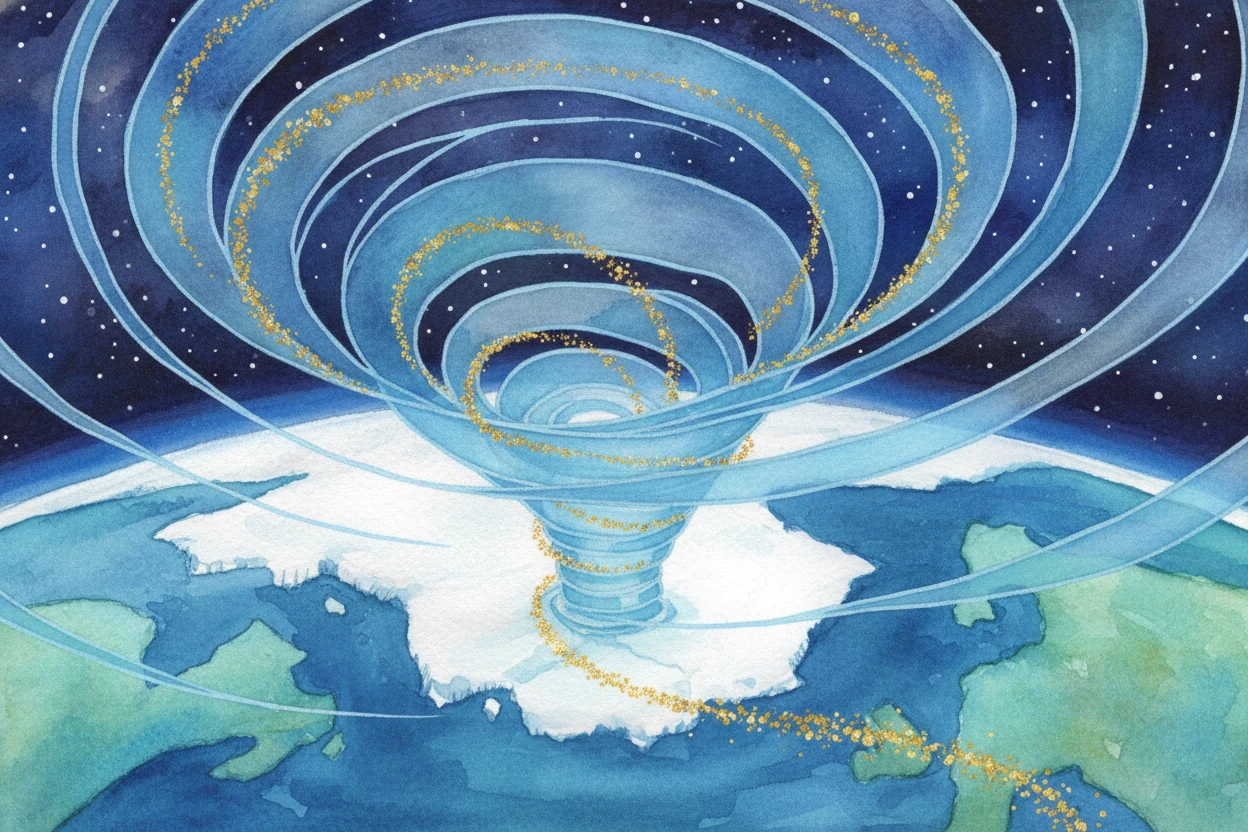
Every line gathers at the same two places: the poles. So that is where the sparks get poured — which is why the lights love the far north and the far south.

Step five · The crash that glows

Sixty to a hundred and fifty miles above the snow, the sparks finally hit something: air.

Watercolour of glowing field lines funnelling down over polar ice, gold sparks spiralling in with them
Down they spiral, into a funnel nobody on the ground can see.

60–150 miles up — far higher than any airplane flies

the air up here is thin and quiet: oxygen and nitrogen

every single crash makes one tiny flash of light

When a spark from the Sun crashes into a bit of air, that bit of air jolts awake — then settles down again by letting go of a tiny flash of light.

One crash, one flash, far too small to see. But the Sun sends billions of sparks. Billions of crashes, billions of flashes — and together they become a glowing curtain taller than a hundred mountains.

The sky is not being lit. It is being hit.

Say it tonight. It is the whole secret in seven words.

Look closer

Step up to the curtain.

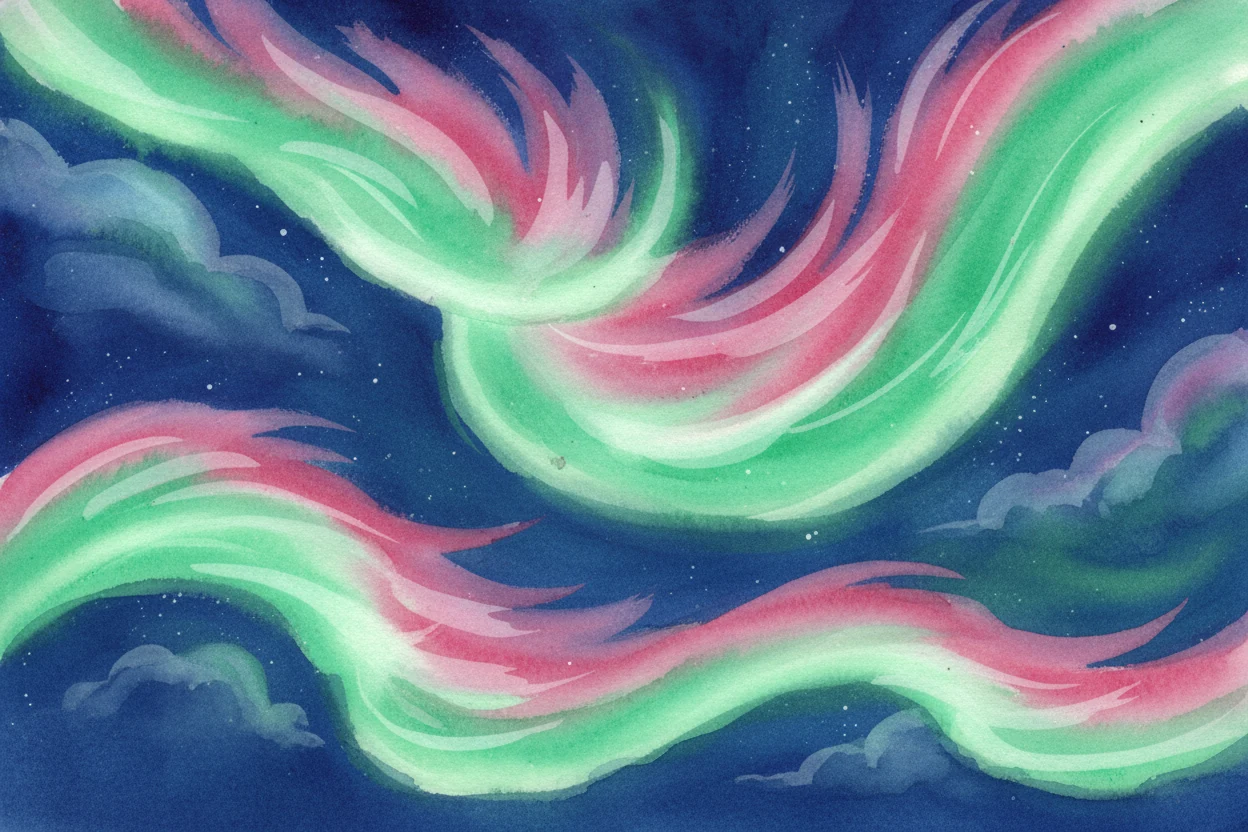
Watercolour of green and pink aurora curtains filling the whole frame, close enough to see the brushstrokes

From far away, it is a green sky.This close, it is brushstrokes of oxygen light.

This close, it is brushstrokes of oxygen light.

Struck air answers in colour.

Green · oxygen, middle heights

Most of the show is oxygen, struck in the middle of the aurora's home, glowing green — the colour you will nearly always see first. If the curtains look like green silk, that is oxygen singing.

Pink · nitrogen, the low hem

Lower down, the sparks reach nitrogen. Nitrogen answers in pink, so pink gathers along the bottom edges — a ruffle at the hem of the curtain.

Deep red · oxygen, very high and rare

And at the very top, where the air is barely there at all, oxygen glows a deep, slow red. It is rare. Catching it is a lucky night indeed.

Now you tell it

The whole story, four cards long.

  1. The Sun throws off tiny charged pieces of itself.

  2. They fly through space for about two days.

  3. Earth's magnet catches them and slides them to the poles.

  4. They crash into the air — and the air glows green, pink, and red.

That's the whole secret. Tell it at dinner.

Put it all together —

The Sun flinging sparks into space
one Sun
A bright spark sweeping across space toward a blue world
one long journey
Sparks funnelled down at the pole
one funnel to the poles
one invisible magnet
Watercolour of a child in a blue parka on snow, looking up at green and pink aurora

…and you get one glowing sky. That is what causes the northern lights.

Somewhere near the top of the world, it is happening right now.

Keep wondering

Read it as a picture book

Watercolour scenes, straight answers, about three minutes cover to cover.

Open the picture book

More wonders for curious heads

One more wonder: Why is space so dark?

And the next question?

Ask anything — Wonderleaf writes and illustrates a picture book for it. That's the whole idea.

Ask your own question

The next wonder, by email

A new question goes up every Sunday evening. We email it to you Monday morning, free to read that week.

One wonder a week, nothing else, ever. Unsubscribe in one click.