A Wonderleaf question
What makes a number prime?
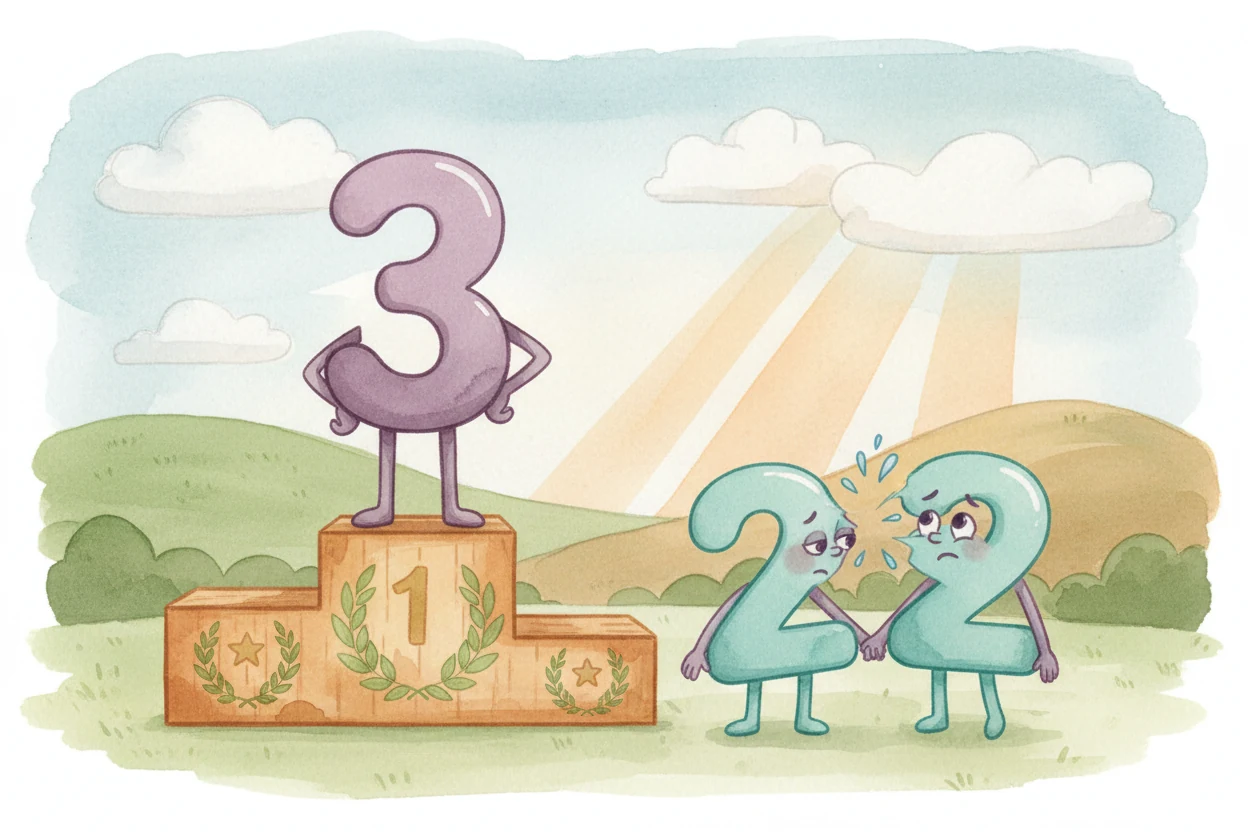
a real page from the book
A prime number is a whole number bigger than 1 with exactly two whole-number factors: 1 and the number itself. If another whole number can divide it cleanly, it is composite, not prime. So 7 is prime, while 9 is not because 3 works.
The pleasing part is that primes act like number ingredients. Break a composite number apart far enough, and you reach primes: 18 becomes 2 times 3 times 3. Mathematicians still hunt enormous primes today, partly because they help protect information online.
Wonder words
- prime
- factor
- composite
- divide
Try it out
Line up small snacks and test which counts can form equal rows besides one long row.
Read the whole picture book
Watercolour scenes, straight answers, about three minutes cover to cover.
Open the picture bookOne more wonder: Why is space so dark?
And the next question?
Ask anything — Wonderleaf writes and illustrates a picture book for it. That's the whole idea.
Ask your own questionThe next wonder, by email
A new question goes up every Sunday evening. We email it to you Monday morning, free to read that week.
One wonder a week, nothing else, ever. Unsubscribe in one click.